• Home
  • About
  • Services
  • Education
  • Behavior
  • Resources
  • Shopping
  • Contact
  • Calendar
  • Policies

Paws Whiskers & Claws, The Feline Hospital

Georgia's premier cat hospital - servicing Marietta, Roswell, Sandy Springs, Atlanta, Vinings, Cumming, Alpharetta, Morningside, Smyrna

(770) 579-6001

4719 Lower Roswell Road, Suite 220
Marietta, Georgia, 30068
  • Home
  • About
  • Services
  • Education
  • Behavior
  • Resources
  • Shopping
  • Contact
  • Calendar
  • Policies

Medicating Your Cat

Download PDF Version

Helpful Links

  • Medicating Techniques
  • Medicating Tips and Tricks
Pill Pockets:
Pill Pockets are a soft chew with a hollow center with room for a pill inside. We recommend giving them to your cat as a treat first, get your cat hooked, then spike one with the pill. They are available in chicken or salmon flavor. Pill Pockets also make great treats for healthy cats knowing they will likely need a pill at some point in the future.
Flavor Doh:
Flavor Doh is a tub of flavored moldable dough-similar to Pill Pockets-but you use only what you need to cover the pill or capsule completely.This option allows you to hide larger pills or capsules. It is available in chicken or fish flavor.
Baby Food:
Cats love single ingredient human baby food! Try crushing the tablet and mixing into a teaspoon of baby food. Make sure that there are no other ingredients such as onion powder as they can be harmful to your cat. We recommend Gerber 2nd stage Chicken and Gravy, Turkey and Gravy or Beef and Gravy.
Tuna Water:
Tuna meat is not good for your cat, but the water that is poured off the can is a great medicating tool. Simply crush the tablet and mix into the tuna water.You can also mix liquid medication into tuna water to ease administration.
Canned Cat Food:
Many medications can be disguised in your cat’s favorite canned food, or you may choose to use a canned food that is different from what they get each day so that it is special and they only get a small amount at meds time.
Kitty Burrito:
If your cat tries to push your hand away with her paw, try wrapping her in a kitty burrito. Place your cat in the center of a towel and wrap one side at a time over her,leaving only her head sticking out. Make sure it is not too tight around the neck, but tight enough so she can’t get her paws out. Ask us for a demonstration, or view this technique online at the website listed at the end of this handout.
Pill Gun:
A pill gun is a plastic rod with a little rubber cup on the end that holds the pill until the plunger is pressed. It is helpful to use a pill gun if your cat tends to clench their jaw or bite when being pilled.The pill gun can be used either with the scruffing technique or the check bone technique as shown at the website listed at the end of this handout.
Be prepared:
Try keeping medications and supplies in an area where you already spend time with your cat. Keeping things at home as routine as possible will make it easy for you and less stressful for your cat.This will also often times prevent your cat from “catching on” and hiding from you at meds time.
Ask For Options:
If you are having trouble medicating your cat, don’t give up. Ask if there are other options available. Some tablets are available in a liquid form and there are compounding pharmacies that may be able to offer you flavored chewable treats or,in rare instances,a transdermal gel that is simply rubbed on the skin.If you’re struggling to administer necessary medications, our staff offers “pilling” lessons and there may be a pet sitter in your area that can come by and help.

Oral Syringe Parfait:

  • Using a 6ml and a 3ml oral medicating syringe and some soft canned food, preferably Science Diet a/d or baby food, draw up 3mls of food in the 3ml syringe.
  • Completely pull out the plunger of the 6ml syringe.
  • Place the full 3ml syringe down inside the 6ml and express the food,withdrawing the 3ml syringe as you go. This creates a foundation of food at the tip of the 6ml syringe.
  • Place any liquid or crushed medication inside the 6ml syringe.
  • Place 2mls of food on top of the medication using the 3ml syringe.You are now done with the 3ml syringe.
  • Your syringe should now be layered food/medication/food.
  • Place the 6ml plunger back into the barrel of the 6ml syringe. A little food-about 1/2ml-will push out of the tip of the 6ml syringe, which is the purpose for putting such a large amount of food in first.
  • Now you are ready to give this mixture to your cat. If your cat does not like it as a treat, simply syringe into their mouth using the technique described in the video link below.

Remember to be calm when trying to medicate your cat. If you are stressed or your kitty is upset,take a break and try again later. Make sure to keep a supply of oral syringes, Science Diet a/d, Pill Pockets and even a pill gun on hand so that you have options.Lastly, remember to always reward your cat after administering any type of medication or treatment. You can reward with treats, playtime or affection and doing so will make your cat associate the meds time with something positive.
 

Filed Under: General

Flea Fundamentals

Download PDF Version

I have fleas! What should I do?

  • DO – Treat all pets in the household with a topical flea treatment such as Revolution or Frontline.
  • DO – Flea comb your pets to remove flea “dirt” as well as live fleas while monitoring progress of treatment.
  • DO – Vacuum! All carpeted or upholstered areas, furniture, mattresses, cracks and crevices around base boards and cat furniture/scratching posts.Discard your vacuum bag or contents of your vacuum canister immediately outside the home so fleas do not crawl back out.
  • DO – Laundry! Launder all throw rugs, bath mats, pet bedding and your bedding. Fleas drown in hot, soapy water. Fleas drown in soapy water.
  • DO – Treat your home. 95% of flea stages are in your environment. Your pets act as a “salt shaker” dispersing eggs everywhere your pet goes in the home. These eggs can survive up to a full year in your carpet, resulting in constant re-infestation if left untreated. If you prefer to do it yourself, we offer Flea Stoppers powder or also check out Flea Busters, both products are safe and effective.
  • DO – Deworm your cat for tapeworms. Cats groom and ingest fleas, eggs and larvae causing tapeworms in the intestinal tract. Deworming should be given when fleas are discovered and again once fleas have been eliminated.
  • DO – Be aware that fleas may cause illness in your pet such as infectious anemia, bartonella (catscratch disease) or flea allergy dermatitis (FAD).
  • DO – Make sure that any pet visiting your home, even for a few minutes, has been properly treated for fleas. Many infestations occur after family or friends have visited your home with their unprotected pet.
  • DO – Treat your car, especially if your pets travel with you.

I have fleas! What should I not do?

  • DON’T – Treat your pet with grocery store brand topical treatments. These products can be toxic to cats, causing kidney failure, allergic reactions, seizures, coma or even death.
  • DON’T – Use flea collars, sprays, or flea powders.In addition to not being very effective, these products can be toxic to cats, causing kidney failure, allergic reactions,seizures, coma or even death. The best place for a flea collar is inside your vacuum bag or canister!
  • DON’T – Use flea shampoos,remember fleas drown in any soapy water and the insecticides used in flea shampoos may not be safe for your cat. Additionally, the insecticide is immediately washed off and the now clean cat is re-infested with fleas from the environment.
  • DON’T – Treat your home with products that may not be safe for you or your pet. Flea “bombs” and most pest control companies are not recommended.
  • DON’T – Use over the counter deworming medication.In addition to potential safety risks, these products usually are not effective.
  • DON’T – Assume your cat does not have fleas because you can not see them. Many cats are excellent groomers and often ingest all of the evidence of flea infestation. Weight loss, hair loss,scratching, scabby patches of skin, soft stools, blood in the stool, black comma shaped debris on pet bedding that turns red when moistened are all other indicators of a potential flea problem.

Flabbergasting Flea Facts!

  • One female flea can produce 2,000 eggs in it’s lifetime – up to 50 per day!
  • Fleas can reproduce year round, especially in Southern climates.
  • The adults you see on your pet are only 5% of the problem; 95% of flea infestations are the tiny eggs, larvae and pupae!
  • Flea infestations can thrive in an area as small as the welcome mat outside your door!
  • Your pet does not have to go outside to acquire fleas; you can bring them in on your socks and shoes!
  • Remember flea control products do not create an invisible shield around your pet. Fleas must come into contact with skin or fur to be affected by topical flea treatments. So you may see an occasional flea from time to time.

Flea-sources

Revolution® (selamectin)

Revolution is the first-ever FDA-approved, topically applied medication for cats that kills adult fleas (Ctenocephalides felis) and prevents flea eggs from hatching, prevents heartworm disease caused by Dirofilaria immitis,treats and controls ear mites(Otodectes cynotis), treats and controls roundworms (Toxocara cati) and hookworms (Ancylostoma tubaeforme). Revolution enters the bloodstream through the skin. Concentrations of Revolution in the blood and tissues prevent heartworm disease and prevent and treat roundworm and hookworm infections. Revolution selectively redistributes from the blood to the skin and other tissues, where it provides protection against fleas, flea eggs, and ear mites for one month. It is safe to use on cats that are at least 6 weeks old.

Frontline® (fipronil)

Frontline is another topically applied medication. One spot-on application kills fleas on cats for 4 weeks.After Frontline has been applied, it spreads to cover the entire body surface, and kills fleas by contact, which means they don't have to bite the animal to die. It is safe to use on cats that are over 8 weeks old.

Capstar® (nitenpyram)

Capstar is an oral insecticide. It is very fast acting - fleas start to die within 30 minutes of administration, and most are dead within 2-3 hours. Capstar is inexpensive,but unfortunately very short acting. After 24 hours, any fleas arriving on the animal may be unaffected. We use Capstar mainly as an adjunct to topical flea treatments. It is safe to use on cats that are both over 4 weeks old,and more than 2 pounds in weight.

Owner compliance is the best way to eradicate flea infestations. Be diligent with the treatment of all pets in the household, be fastidious about cleanliness and be persistent knowing that there is not a quick fix to a flea infestation.Prevention is the best medicine!

Filed Under: General

Litterbox Facts

Download PDF Version

The saying "an ounce of prevention is worth a pound of cure" definitely applies to litter boxes! Follow these simple rules to avoid many of the most common reasons for inappropriate elimination.

Litter Box Basics

You need to consider the number, size, and type of boxes.

How many?

The basic rule is a minimum of one litter box per cat, plus one. That means if you have two cats, you should have at least three litter boxes. Many cats prefer to urinate in one box and defecate in another. In a multi-level home, you should have at least one litter box on every floor.

What size?


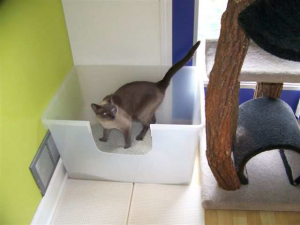
img-6When it comes to litter boxes, larger is better. Even the so-called large litter boxes sold in pet supply stores are too small for most cats. The litter box should be 1-1/2 times the length of your cat's body so that your cat has room to move around in the box and not have to step in soiled areas.

We recommend using large plastic storage bins instead of commercial litter boxes. You can cut an entrance on one side to provide easier access. The high sides of these bins help contain litter when the cat digs and covers. Some cats, especially older and arthritic cats, can't or don't squat to urinate, and may accidentally urinate or defecate over the side of a smaller box; these bins eliminate that problem.

Purchase clear or transparent bins, especially for multi-cat households. Cats are vulnerable when they are in the litter box, and it's important that they can see what's around them. You can bring us your own bin and we'll cut and sand the entrance for you for a minimal charge. If you decide to try cutting an opening on your own, you must use a Dermal Tool with a heavy duty reinforced cutting disk.

Litter box types

  • Do not use hooded litter boxes exclusively! The hood traps odors inside and, even if scooped every day, it will quickly become offensive to your cat. The hood also makes it easier for a cat to be ambushed if there is any aggression between cats.
  • Note: A hooded litter box may be helpful if you have a cat that is shy About her toilet habits, but offer uncovered boxes as well.
  • Even though we recommend large storage bins as litter boxes, consider providing a large shallow container as an alternative. For example, you can get an inexpensive 30"x30"x2" plastic drip pan (intended for washing machines) at Home Depot. These are ideal for arthritic cats.
  • Electronic self-cleaning litter boxes may work for some cats, but we do not recommend them for a number of reasons.
  • Do not use litter box liners? Cats generally don't like the feel or the noise of these bags, and they actually create more mess than not using them because cats’ nails snag and tear the liners. Scented litter deodorants may irritate your cat's paws and the scent is offensive to delicate feline noses.

Litter Box Location

Placement of the litter boxes is extremely important. The litter box areas must be comfortable, convenient and safe.

    • Provide litter boxes on every floor of a multi-level home.
    • Do NOT place litter boxes in the same area as your cat's food and water. You wouldn't want to eat where you eliminate and neither does your cat!
    • In multi-cat households, do not place the boxes in "dead end" locations (such as closets) that offer only one way out. If a cat feels threatened by another cat, the dead-end location may create an opportunity for her to be ambushed, and she'll avoid using the box. Place the litter boxes in open areas or next to a cat condo so your cat has the option to flee "up". Avoid forcing the cat to use stairs or a cat door to reach the litter box because that can also lead to an ambush.
    • Do not place litter boxes in dark, loud, or odorous places, such as the Laundry room or near the furnace!
    • Cats cannot see in the dark; there must be a light source nearby so that The cat can use the litter box at night. Nightlights work well.
    • To keep other pets or small children away from the litter box, you can place a baby gate across the room entrance. You can raise the bottom of the gate a few inches off the floor to allow the cat to crawl under.

If you have further questions or would like an evaluation of your litter box placement, please contact us.

Choosing the Litter Box Filler

Remember to offer unscented litter. Your cat's nose is quite literally at least 14 times more sensitive than yours. What smells "fresh" to you can be overwhelmingly strong to your cat, and may lead to litter box avoidance!

Scoopable litter

Most cats prefer clumping scoopable litter over clay litter. Brands of scoopable litter differ in texture; you can experiment a bit to find the texture or brand that you and your cat like. (However, once you find a litter your cats like, avoid changing brands because sudden change can be disruptive to your cats.) You must scoop out clumped waste daily.

We recommend Dr. Elsey's Cat Attract litter. It is a clumping, scoopable litter that tracks less that other clumping litters. Cats prefer the size and texture, as well as the natural herbal blend (the scent mimics the aroma of soil and plant materials). You can use Cat Attract Litter Additive to any brand of unscented litter. We also recommend Dr. Elsey's Precious Cat Classic Unscented or Ultra Unscented litter.

A good alternative for geriatric or declawed cats is Exquisicat Advanced Scoop, which is a clumping paper litter with a soft airy texture.

If you notice that your cat doesn't bother to cover the urine or feces in the box, chances are she doesn't like the type of litter you are offering.

Clay litter

Clay litter box filler is recommended for kittens that might accidentally ingest the finer scoopable litter. You must empty, clean, and refill the box daily. We recommend the Publix brand clay litter.

Alternate litter box fillers

Cats in the wild can chose from a wide variety of surfaces such as grass, pine straw, dirt, gravel, etc. You can provide options for your indoor cats too. While scoopable litter should be the filler in most boxes, you can offer alternate litter box filler in one or two boxes.

Some cats prefer using a puppy-training pad inside a regular litter box. The pads are available in any pet supply store. Cats may use them for urinating as well as defecating. Remove the soiled pad, wipe the box clean, and replace the pad whenever it is soiled. Puppy-training pads are a great option for cats that urinate excessively. Pads may also be preferred by declawed and arthritic cats.

Strange as it may seem, some cats prefer an empty litter box. They may not like the feel of anything under their feet except the smooth plastic box.

Avoid alternate litter box fillers that have a strong odor, such as cedar or citrus- scented litter or recycled newspaper pellets.

Litter Box Cleanliness

If you're using clay litter, you must empty, clean, and refill the litter boxes daily. Don't just scoop out the solid waste and stir up the wet litter; it may look better to you, but all you've done is spread the urine throughout the box soiling the entire box and making it offensive for your cat to step in.

If you're using scoopable litter, scoop each litter box at least once daily. Add fresh litter as needed to replace the soiled litter that was removed.

Empty and thoroughly clean scoopable litter boxes at least every 1-2 months. Use soap and water and be sure to remove all traces of litter and soil, and then disinfect the box with a 10% bleach solution. Be sure to rinse the box thoroughly afterward to remove all traces of bleach!

Keep the area around the litter boxes clean. You can place the litter boxes on a plastic runner, a vinyl tablecloth, or a short-knapped bath mat. These can be cleaned easily by shaking them outside or laundering them.

You can place a tracking mat in front of the litter box. We recommend the Litter Welcome Mat, which we have available for purchase at Paws Whiskers & Claws. Any litter that is on your cat's feet falls through the grid and into the mat; it's easy to clean and reduces the amount of litter tracked onto the floor. You can pour the tracked litter from the tray back into the litter box.

Replace litter boxes about every two years, or more frequently if the surfaces become deeply scratched or stained.

Cleaning Soiled Areas

If your cat has urinated or defecated outside the litter box, you must clean the area to completely eliminate all traces of the stain. Soap and water is not enough. You may not notice an odor, but your cat's delicate nose will, and that will encourage her to use the same spot again.

There are many odor-eliminator products on the market, but the enzyme cleaners tend to work the best. We recommend Urine Off or Veterinary Strength Outright Stain and Odor Remover. We have found these products to be quite effective when used as directed.

What If My Cat Starts Urinating or Defecating Outside the Litter Box?

There are many reasons why a cat may stop using the litter box, including:

      • Medical conditions,
      • Stress and inter-cat aggression,
      • Poor litter box logistics.

Remember that urinating or defecating outside the litter box is unusual; your cat is telling you that something is wrong!

The first step is to take your cat to the veterinarian!

The most common reasons for litter box problems is that the cat is trying to tell you that she’s ill or in pain. This may be a simple urinary tract infection or something more serious.

After medical reasons have been ruled out, you can start to consider the other possible causes.

Read our handout "Coping with Inappropriate Elimination" for help in determining he cause of the problem and how to address it.

Photo property of Ingrid Johnson, CCBC Certified Cat Behavior Consultant of Fundamentally Feline, LLC.

Filed Under: Behavior

Finding a Home for a Stray Cat


Download PDF Version

It’s a familiar dilemma for many cat-lovers: we want to rescue homeless and abandoned cats,but we can’t always keep them! Here are some tips to help you find a good home for a stray cat.

Please note: Paws Whiskers & Claws doesnot accept cats for adoption.

If you want a new home for your own pet...

The sad fact is that almost 80% of cats do not stay with their first owner beyond two years. Shelters usually have fewer strays than animals that have been turned-in by former owners. The reasons for giving up a pet vary, but often include allergies, moving,childbirth, and behavior problems. The good news is that you don’t have to give up the cat in order to address these (and other)issues! If your cat has a medical or behavioral problem, call us for behavioral advice or to set up an appointment.

If you or a family member has an allergy problem, consult a pet-friendly allergy specialist, who will work with you to manage the allergies and allow you to keep your cat.

Are you sure the stray is homeless?

Don’t assume that a wandering animal is homeless, or that she has an uncaring owner. Even careful and loving owners sometimes lose a pet. If the stray comes to you willingly and seems friendly, it may be someone’s missing pet. Most cats don’t stray far, so ask neighbors whether they recognize the cat. Call local shelters and ask whether they have reports of a missing pet. Check the Lost and Found ads. Have the stray checked for a microchip ID.

If the cat’s owner cannot be found, your next task is to find her a new home.

First things first

The first priority is to keep both the stray cat and your pets safe until you can find a new home for the stray. If you have other pets, keep the stray separate from them to avoid spreading disease or parasites. Maybe you can keep the stray in a small room or a bathroom. Donot allow your pets to share the stray’s dishes or litter box. If you cannot keep the cat for a few days, ask a friend to foster the cat for you, or board the cat at an appropriate facility. (Be sure to ask whether there’s a discount for rescued strays!)

Make the stray more adoptable

It will be easier to place the stray if you can have a vet examine and vaccinate her, and test for FIV and FeLV. If the cat hasn’t been spayed or neutered,consider having that done; there are low-cost spay/neuter programs that can help with the cost. Socialize the stray as much as possible; visit and play with her, and get her used to being petted and brushed.

Spread the word!

Print a flyer

Print a flyer with a picture of the cat and your contact information. Tell a little about the cat (she’s playful, she’s quiet,she likes children, she doesn’t like dogs,etc.) and provide any medical information you have (whether she’s been spayed,vaccinated, etc.), and why you need to place her. See the sample on page 4.

Advertise

Place an ad in local newspapers, including the small weekly news sheets; many offer free “found” ads. Post signs in your neighborhood. Put a notice in your neighborhood newsletter. Ask to place a flyer in veterinarians’ offices and pet supply stores. Post a notice on the bulletin board at your office, your gym, your church, and anywhere else you can think of. Use the Internet! You can place notices on community lists and chat rooms. Many people prefer to adopt cats from private homes rather than from shelters, but you need to reach them!

Word of mouth

Talk to friends, neighbors, family members, co-workers, the clerk at the grocery store, and so on. The more people you talk to, the better the chances that you’ll find someone who will provide a great home for the cat. Keep a couple of flyers with you at all times so you can give one to anybody who expresses interest.

Wanting the stray is not enough!

You may be tempted to give the stray to the first person who calls – but please don’t! Carefully screen the callers until you’re sure that you’ve found a good home. Remember that the cat’s life depends on your decision. It is better to mistakenly turn down a good home than to put the cat into a bad home. You need to make sure that the person is willing and able to take on the expense and responsibility of owning a cat.

Ask to see where the cat will be living. Check the condition of other animals in the home to verify that they are well cared-for. Ask what happened to the person’s previous pets. Does the potential adopter have a vet? Does the person understand the necessity of vaccines and annual exams? Will the cat be fed a high-quality diet? Will she be kept safely indoors? Does the prospective owner understand the dangers of declawing or the harmful results of not spaying and neutering?

Do not give the cat away for free. People who are willing to pay something for a pet are more likely to be serious about caring for it. Sad to say, there are also people out there who gather free animals for medical experiments, or worse.

No-kill shelters and rescue organizations

Contact the no-kill shelters and rescue organizations in your area and ask whether they can accept the stray. It is important to verify that it is a no-kill shelter, meaning that they will keep the stray until she is adopted. (Other shelters will often euthanize an animal within a few days.) No-kill shelters are usually full, and you may have to place your stray on a waiting list.

You can find the names and phone numbers of local shelters in the phone book,often under the name of the county where you live.

There’s lots of information on the Internet about shelters and rescue organizations. Also refer to the Resources section below. Remember that Website addresses may change, so try using a search engine to locate groups and shelters in your area.

Keep in mind that there are far too many homeless pets and too few people willing to help place them. If you don’t immediately get a return call from a rescue organization, try again. These hard-working animal-lovers are doing their best, but there are only so many hours in a day!

Weekend adoption events

Many organizations run weekend adoption events at stores such as Petsmart.There may be a waiting list to get your stray into one of these adoption events.Many of these organizations need volunteers; perhaps you can offer to help staff an adoption event in exchange for bringing your stray cat for adoption. These organizations may also have names of possible foster parents.

Don’t give up!

It often takes time to place a stray cat into a new home. There are just too many homeless animals and too few homes. Keep at it until your stray cat has a suitable forever-home.

And if you decide you can squeeze one more stray into your home and your heart, so much the better! That leaves a potential home for another stray kitty!Contact us for free advice on how to integrate the new cat into your household,or download information from our Web site.

Resources

    • www.spotsociety.org
    • www.petfinder.com
    • Good Mews, a no-kill shelter in Marietta or phone 770-499-2287
    • Furkids, a no-kill shelter in northeast Atlanta or phone 770-613-0009

Spay/neuter assistance

      • Spay Georgia (770-662-4479)
      • Friends of Animals (770-662-6033)

[Sample flyer]

Seeking a great home for a special cat!

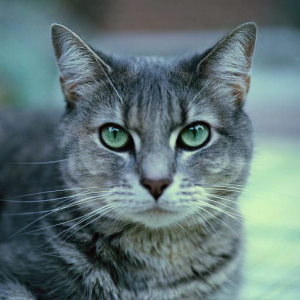
This handsome five-year-old gray tabby was found wandering along a busy road. We would love to keep him, but our lease limits us to the two cats we already have, so we need to find him a new home quickly.

He has been examined by a vet, vaccinated, and tested for FIV and FeLV(both negative). Other than being a little thin, he’s in good health. He hasbeen neutered and treated for flea and heartworm prevention.

He is friendly and likes to play and cuddle. He seems a bit scared of children, so he’d probably be happier in a home with adults. He gets along with dogs and other cats, and enjoys watching our Video Catnip DVD!

img-5

If you’re interested in adopting this kitty, please call 770-555-1234 or send an e-mail message to <myaddy@isp.com>. Adoption fee and interview required.

Filed Under: General

Indoor Cats Only

Download PDF Version

Here at Paws Whiskers & Claws, The Feline Hospital we are advocates of cats being kept indoors. Indoor only cats live longer, healthier lives and have less risk of disease, injury or getting lost or stolen. Should you decide to give your cat supervised access to the outdoors, we recommend using a leash and harness or outdoor enclosure and making sure your cat has proper identification in the form of a microchip and a collar and tag. All cats, especially those with access to the outdoors should also be on heartworm and flea prevention. The following is a list of risks facing free roaming cats and the families that love them.

  • Free roaming cats are often targets of human cruelty. Cats may be shot, stabbed, set on fire or captured and used as bait to train fighting dogs.Some cats are stolen for research and sold to laboratories.
  • Free roaming cats may be prone to being “rescued” by a Good Samaritan who may take your cat in as one of their own or take your cat to a local shelter, veterinary hospital or animal control agency.
  • Cats get hit by cars, and that kills cats every day.
  • When people attempt to avoid hitting cats while driving they may be injured or killed. Your free roaming cat can cause a person to die.
  • Allowing your cat to roam freely decreases the human animal bond. Why is it acceptable to let your cat outside to wander the neighborhood when you would not let your dog out for 12 hours to roam unsupervised?
  • Free roaming cats are susceptible to fighting with other free roaming animals resulting intransmission of diseases, abscess wounds, scratched eyes or internal injuries causing increased cost of medical care. Diseases they may encounter include rabies, cytaux zoonosis, feline leukemia and FIV. No vaccine is 100% effective.
  • Free roaming cats are vulnerable to attacks from predators including coyotes, foxes, birds of prey and, unfortunately, free roaming dogs.
  • Free roaming cats may have medical emergencies that are not seen by their owners, such as seizures, strokes or worse. Sometimes the cats recover and return home, but the family never knows what happened. You cannot seek treatment for a medical issue of which you are not aware.
  • Free roaming cats may encounter many toxic dangers including antifreeze, pesticides,rodenticides, fertilizers, traps or toxic plants.
  • Free roaming cats are more likely to contract debilitating parasites such as worms, ticks, mites and fleas. Zoonotic diseases(transmissible from animals to humans) such as roundworms and rabies may be spread by outdoor cats.
  • Poop and pee are important to see! What is or is not in your cats litterbox are important indicators of the health of your cat. For example,too much or too little urine can be indicative of an important and possibly life threatening medical issue.
  • In cold climates, cats may crawl under car hoods to warm up. When the ignition turns, the cats are mangled. Additionally, they may seek refuge in crawl spaces, sheds and garages where they may be easily locked in, without food or water, for extended periods of time.
  • Free roaming cats may not find their way back home, especially senior cats.
  • Allowing your cat to roam freely is not good for the environment. They do in fact kill songbirds,small mammals and other wildlife.
  • Allowing your cats to be unsupervised outside may cause your neighbors to think of you as disrespectful. Free roaming cats cause behavior problems for neighbors' indoor only cats; roaming cats may eliminate on someone else's property, often in gardens. They may also relieve themselves on or scratch the hoods of cars.
  • Indoor only cats live an average of three times longer than outdoor cats.

What is the upside of being encouraged to roam the neighborhood? Life is more interesting outdoors. Far more dangerous too. Nothing listed above is opinion - it is all fact. We know these are real threats to cats allowed to wander outside. We just don't know exactly how often they occur. We know most of these things can't happen to indoor cats. Please reference our Environmental Enrichment handout for ideas on keeping your cat active, stimulated and happy within the safety of your home.

Written by Ingrid Johnson, CCBC Certified Cat Behavior Consultant of Fundamentally Feline 

Filed Under: General

Inappropriate Elimination, What to Do When your Cat Refuses to Use the Litter Box


Download PDF Version

Cat owners often become understandably frustrated when their cat begins to urinate or defecate outside the litter box. Nearly 1 cat in 10 will have an inappropriate elimination problem in her lifetime.

Why isn’t my cat using the litter box?

There are many reasons why a cat may stop using the litter box, including:

  • Medical conditions
  • Stress and inter-cat aggression
  • Litter box logistics

Remember that urinating or defecating outside the litter box is unusual; your cat is telling you that something is wrong!

What should I do if my cat starts urinating or defecating outside the litter box?

The first step is to take the cat to your veterinarian! The most common reason for litter box problems is that the cat is trying to tell you that she’s ill or in pain. This may be a simple urinary tract infection or something more serious.

After medical reasons have been ruled out, you can start to consider the other possible causes.

Do not punish the cat or confine her to just one room. Some people think they can “re-train” the cat in that way, but it doesn’t work! Cats aren’t trained to use a litter box; they use it instinctively. Confining the cat to one room will increase her frustration and stress level, but it won’t solve the problem!

What medical reasons can cause litter box problems?

Your cat may have a urinary tract infection, urinary crystals, bladder stones,or external infections such as urethritis or vaginitis. It could even be pain caused by a seemingly unrelated problem such as an abscessed tooth or arthritis.

Why? If your cat feels pain or discomfort when she uses the litter box, she doesn’t understand that the pain is coming from her kidneys or broken tooth, or whatever the cause. She just knows that litterbox=pain, so she’ll try try to find another place to eliminate, hoping that will make the pain end. But urinating on the bedroom carpet doesn’t ease her pain either, so she tries another spot, and the cycle continues!

You may even need to change the look, feel, or location of the litter box after the medical problem is resolved to encourage your cat to use the litter box again.

Other medical problems that may be associated with inappropriate elimination:

  • Kidney Failure
  • Diabetes Mellitus
  • Hyperthyroidism
  • High Blood Pressure
  • Anxiety Disorders
  • Constipation
  • Impacted Anal Glands
  • Intestinal Parasites
  • Skin or Flea Allergies
  • Cancer

Appropriate treatment of the underlying medical condition may end your cat’s inappropriate elimination. If not, it’s time to examine other possible causes.

Stress-related elimination problems

Yes, cats can get stressed, and they may show their distress by urinating or defecating outside the litter box.

Stress can come from changes in your household: moving, the birth of a child, the addition of another pet,etc. These stresses may cause not only litter box problems, but they may aggravate existing medical conditions.

When possible, introduce changes grad ually, and allow the cat to explore new people and things at her own pace.

You can help your cat cope by providing a “safe room” for your cat – a place where she can go to escape the stress. The safe room must have food,water, litter boxes, a comfortable kitty bed, and some toys. Put a baby gate in the doorway to discourage unwanted visitors. Introduce the cat to the saferoom, but you don’t need to confine her there; let her use it when she feels the need.

Cat condos and cat trees are important to stress management. A tall sturdy cat tree gives your cat a secure perch from which to view what’s going on,and it gives her a place to escape. This is particularly important if you have small children, dogs, or multiple cats. The height offers your cat safety and a feeling of control. It is especially comforting to them if they can view multiple rooms from a single vantage point.

Consider using Feliway, which is a synthetic product that mimics feline facial pheromones and helps a cat feel at ease.It is available in a spray as well as an electric diffuser.

We offer behavioral counseling and a variety of educational handouts that may help you make your cat more content and less stressed

Aggression between cats

One cause of stress is aggression between cats in a multi-cat household. You can greatly reduce this aggression by providing plenty of litter boxes as well as multiple food and water dishes. It is important that the cats don’t have to compete for too few bowls and boxes! Place feeding stations and litter boxes throughout your home; don’t concentrate them in one area! Cats are at their most vulnerable when they are eliminating, and so it’s vital to make sure that they feel safe in the litter box and won’t be ambushed by other cats, the family dog, or a curious toddler!

Feliway (described above) can help with aggression issues.You can also call us to discuss other behavior modification options, including medication.

Remember that cat trees and cat condos are important to multi-cat households. They help cats establish a hierarchy, which is important to their group dynamic.

Aggression between catsLitter box logistics

There are several factors to consider, including the number and size of boxes, location, type, litter box filler,etc. Inappropriate elimination could be the result of having too few litter boxes,using the wrong size or type of box,placing the boxes in appropriate locations, or using the wrong litter box filler.

Please read our Litter Box Facts handout for detailed information on maintaining your cats’ litter boxes.

Cleaning and managing soiled areas

If your cat has urinated or defecated outside the litter box, you must clean the area to completely eliminate all traces of the stain. Soap and water is not enough. You may not notice an odor, but your cat’s delicate nose will, and that will encourage her to use the same spot again.

Sometimes the best solution is to give the cat what she seems to be asking for: place a litter box in the area where she’s eliminating! If you don’t want to leave the litter box there permanently, we will advise you on how to gradually move the litter box into a more acceptable location after your cat uses that litter box consistently for several weeks.

There are several odor-eliminator products on the market, but the enzyme-based cleaners tend to work the best. The product that we recommend most frequently is Urine Off. We also suggest Veterinary Strength Outright Stain and Odor Remover.

You can also make the soiled are less attractive to your cat:

  • Place cat’s food or water at the site (after cleaning)
  • Provide alternative way to mark (scratching post or pad)
  • Aluminium foil
  • Scat mats
  • Potpourri on the site
  • Motion sensors with audible alarm
  • Catnip on the site
  • Double-sided tape
  • Upside-down contact paper or vinyl carpet runner (nub side up)
  • Citrus-based sprays (many cats dislike the smell of citrus)
  • SsssCAT motion sensor deterrents

Call us for additional ideas about deterrents!

If that doesn’t work...

Sometimes a cat will continue to soil an area that has been thoroughly cleaned.

Why? The cat apparently feels a need to mark that spot. Every time you remove the scent marking, your cat may be compelled to mark the area again.

When that happens, you can try a different approach. Instead of using enzyme cleaner, clean the area with plain water, then spray the area with Feliway. You won’t smell urine, but your cat may be satisfied that the area is still marked, and not need to mark it again. Use Feliway on the area; the Feliway encourages facial marking and reduces the chance that the cat will spray urine there again.

Spray Feliway on the area twice a day (every 12 hours) for the first 4 weeks,then once daily for another 4 weeks.

Note that the enzyme cleaner breaks down the pheromones in Feliway,making it ineffective, so don’t use enzyme cleaner on surfaces marked with Feliway.

The bottom line

  • Inappropriate elimination often has a medical cause.
  • There are many things you can doto prevent behavioral litter box problems. It’s far easier to prevent these problems than to resolvethem after they start.
  • Always remember that your cat’s relationship with the litter box is complex and emotional. It’s not just a feline toilet

Filed Under: Behavior

Environmental Enrichment, A Bored Cat Spells Trouble

Download PDF Version

Here at Paws Whiskers & Claws, we advocate indoor only cats. This lifestyle keeps them healthier,safer and living longer lives. However, cats may get bored or frustrated being kept inside. Below are some suggestions for keeping them active, stimulated and happy.Remember that cats are very prey specific, so trying different varieties of toys is important to find just what your cat likes to hunt.

Alphabet Magnets
Place these on the lower half of the fridge, oven, dishwasher, or on a magnetic board for your cat to bat around. You can find these at most toy stores.
Birds and Bees
For visual entertainment attract birds or squirrels with strategic placement of bird and squirrel feeders outside windows and screened porches. For nighttime viewing, try leaving a porch light on to attract flying insects. This may help you sleep better if your cat is active at night.
Bringing the Outside In
As long as your cat is current on vaccinations and deworming, bring in tree branches, rocks, leaves, things from the outdoors to pique their senses. Try hiding treats around or under these items for extra fun, or fill a box with leaves and throw a handful of treats in for your cat to forage.Additionally, you may purchase live catnip or grass plants from most PetsMart locations.These plantsprovide instant gratification and cost about $5.00 each.
Cat Carrier
Try leaving your cat’s carrier out in the home all the time. Make it inviting by placing bedding and/or treats inside for your cat to enjoy. This will also desensitize your cat to the carrier making trips to the vet easier for both of you.
Catnip Marinade
Place all soft fuzzy toys in container with catnip to “marinate”. You can do this as often as needed to refresh the scent.This can be financially helpful because you won’t have to buy new toys as often.
Chirping Fuzzy Mice and Birds
Wal Mart has a gray one with pink ears that is a favorite. There are many versions of this motion activated toy. Some chirp like live mice, some move around and some have flashing lights.
Drinking Fountain
There are several different water fountains for cats that simulate drinking from a stream or water faucet. The model we prefer is the Drinkwell Pet Fountain. It can be taken apart and cleaned, has charcoal filters that can be replaced as needed and you can purchase an optional reservoir which is great for multi-cat households or cats that require lots of fresh water.Retail price starts at approximately $49.99 and can be ordered directly from the manufacturer at www.vetventures.com or by calling 866-322-2530.Also available at PetsMart.
Feline Furniture
Cat Condos will give your cat a place of their own, increase vertical space in your home and create “safe zones” from dogs, children or other cats. Our favorite condos are from www.AngelicalCat.com,they carry a wide array of styles, sizes and colors. You may reach Angelical Cat by phone at 954-747-3629.Some other websites we recommend are www.TrendyCat.com,www.KittyPod.com and www.TheRefinedFeline.com.Scratching posts and horizontal cardboard scratching pads give your cat an appropriate surface to scratch. The “Cat’s Meow Scratching Post” is available at Paws Whiskers & Claws for $60. Cardboard scratchers are available at most pet retail outlets such as PetsMart and the cost starts at approximately $6.95.
Fish Tanks
Having a fish tank is an excellent way to keep your cat occupied, especially at night when you are trying to sleep. Obviously, you’ll want to make sure to have a secure lid to keep fish safe. Also, make sure you are prepared for the effort of caring for additional pets.
Foraging Toys
These are toys that must be manipulated for your cat to obtain a food reward. A couple of examples are the “Kitty Kong” and the food distributor ball from www.SlimCat.com.Unfortunately, there are not many styles of foraging toys for cats available at most retail pet outlets. You can make your own foraging toys by using small plastic household containers and cutting out holes that are slightly larger than the size of the food/treats that you will put inside.Another homemade variation would be a shoebox with holes cut out about the size of a ping pong ball and then fill with treats and a few ping pong balls as an “obstacle”.Be sure to tape the lid on.We have a variety of foraging toys available at Paws Whiskers & Claws.
Hunting
In addition to foraging,satisfy your cat’s prey drive,by hiding treats or food around the house, in places your cat frequents such as: on top of their scratching post,cat condos, window seats or anywhere you know they will seek it out or stumble upon it.
Interactive Toys
These are toys that allow you and you cat to play together and often provide great exercise for your cat. Laser pointers, available at most office supply stores and some department stores like Target, range in price from $6-$20. The Feline Flyer is a feather toy that mimics a bird and the Dragonfly is a toy on a wire creating erratic movement. Both of these toys are available at Paws Whiskers & Claws.A good old fashion piece of string works great too-just make sure to always put it away when playtime is over. If ingested, string or ribbon can cause an intestinal obstruction which is very dangerous.
Keepin’ It Fresh
While cats don’t like drastic changes to their routine or environment, subtle changes can be good. Moving the furniture around or changing a cat condo from one window to another can be stimulating and create interest instead of stress.
Light-up Laser Balls
Just like the chirping fuzzy mice and birds above, there are many different motion activated balls that provide hours of entertainment for cats by flashing when touched or rolled.
Motorized Toys
There are many motorized toys available on the market.The Panic Mouse has been previously featured in Catnip magazine as “Best Motorized Toy” of the year.It is“...an electronic mouse that randomly waves a wand and attached spider toy through the air for your cat to chase and grab, mimicking a human waving awand toy. The wand moves in different directions and at different speeds,sometimes pausing. It is also height and speed adjustable.” The Panic Mouse as well as other great motorized toys can be ordered at www.PanicMouseInc.com or by calling 951-506-3643 and costs approximately $30.00.At Paws Whiskers & Claws we offer the Fling-ama-string, hours of automatic fun for your feline friend.Remember your cat should always be supervised during play-do not leave these toys turned on when you are not home.
Nature Videos
Some cats enjoy watching television, especially if it’s geared for them. They’ll love the sounds and sights of nature videos or try leaving the television tuned to Animal Planet. There are also videos produced for cats that feature aquariums,birds and squirrels. You can purchase our “Kitty Cat TV” DVD for about $20 or check the ads in the back of “Cats” or “Cat Fancy” magazines.
Nightlights
Cats can not see in the dark, however cats can see well in about 1/8th of the light required by a human.This is why cats are most active and hunt at dawn and dusk. This lighting can be mimicked at home by placing nightlights by food,litterbox or sleeping areas. This will benefit all cats, particularly those who are geriatric, and it may also decrease intercat aggression.
Old Standbys
Cats love investigating things like cardboard boxes, paper bags, newspaper tents and cardboard rolls from paper towels or toilet paper. You can also try putting toys or treats inside the cardboard rolls thus turning them into foraging toys.
Outdoor Enclosures
Even indoor cats can enjoy the outdoors safely through screened in porches,screened in decks, window seats, chain link enclosures (www.HabitatHaven.com)or Kitty Walks (877-548-8905 or www.KittyWalkSystems.com).The most important thing is to ensure that the enclosure is secure, covered on all four sides and has a roof or ceiling so that cats can’t escape.The Purrfect Fence(www.PurrfectFence.com)does not have a roof but does offer a secure “Houdini-Proof" arch that prevents cats from being able to scale the fence.If you allow your cats outdoor time in an enclosure or on a leash and harness, makesure your cats are current on vaccines, flea control and are dewormed regularly.
Ping-Pong Balls
Try putting 2 or more ping-pong balls in a bathtub. Cats will love jumping in and batting them around. This can be a bit noisy, so if the bathtub is near your bedroom, make sure to take them out before you go to sleep.
Training
Contrary to popular belief, cats can be trained to sit, come and do tricks on command, even walk on a leash and harness. Treat training is recommended for cats. Much like their canine counterparts, training your cat stimulates the brain,gives them a job to do and gives them a more enriched life. A good reference book is “Training Your Cat” by Dr. Kersti Seksel.
WaterFun
Place small wind up toys in a sink filled with water; also try any items that float like ping-pong balls, or a large bright marble so they have to “go fishing” for it.You can find wind up toys in the infant bath section of toy or department stores.

Written by Ingrid Johnson, CCBC Certified Cat Behavior Consultant of Fundamentally Feline  Photos property of Ingrid Johnson

Filed Under: Behavior

Foraging, Hunting for the Indoor Cat

Download PDF Version

Helpful Links

  • Implementing Foraging As A Feeding Protocol

Foraging toys are food dispensing containers that your cat manipulates in efforts to get food or treats to dispense. These types of toys give your indoor cat something to stalk and hunt,giving them a much needed outlet for their prey drive and hunting instincts. Most behaviorists agree that many behavior problems in cats stem from boredom,frustration and stress. A lack of mental stimulation can result in up to 30% loss of brain function over time in both animals and humans.Much like the need for humans to learn a new skill, do crossword puzzles, read etc. to keep our brains working; cats and dogs need similar challenges to alleviate senility, boredom, and mental dullness. The concept of foraging is designed to make your cat think and problem solve, and they get rewarded each time they figure out the puzzle.

Getting Started

Foraging can be a fun game and a way to give your cat treats; or if they are really good at it and are active foragers, it can be how you feed them their dry food. It is recommended that you start off with clear containers with a lot of holes so it is really easy and they barely have to bat at it to get food to dispense.We recommend using a plastic water bottle as a first toy. It is clear so your cat can see, hear, and smell the food rattling around inside. It is best to fill up the container;but not so full that the food does not move around freely; but DO NOT simply put 2 or 3 pieces of kibble in there because that is when foraging toys are the most difficult.

Once your cat has gotten the hang of foraging, move on to containers with fewer holes, objects that are opaque, objects that do not roll easily, or even cubes! It is important to continue to offer new and interesting objects to keep your cat from getting bored with them. If they continue to empty the same container for months and months, they may lose interest.

We have a variety of foraging toys available for purchase at Paws Whiskers and Claws, and you can try making some yourself.You are only limited by your imagination and creativity. It is also a great way to recycle your plastic household containers one additional time before they make it to the recycling bin!

Another great foraging toy purchase is the Peek-a Prize Toy box. This is a finished wooden box with many holes cut into it like a giant piece of Swiss cheese. Fill the box with balls,toy mice and food; so that the toys become an obstacle that your cat must move in order to access the food.

You can easily make one of these foraging boxes yourself out of an old shoebox.Simply cut some holes in the side and top of the shoebox slightly larger than the toys you are putting inside.This is so that they can get the toys out too. Fill with a handful of food.It is important to tape the lid on so that your cat does not simply take the lid off and eat out of the box like a bowl.Some cats, especially kittens, will be motivated by the toys alone and forage for them without even needing food to motivate them. Cereal boxes can also work well for this type of toy.

Motivating Your Cat To Forage

  • Place the foraging toy on the floor and sprinkle a few pieces of the food or treats around the toy, so that your cat will eat those and then smell that there are more in the toy. Hopefully they will get the idea and bat the object around with their paws or nudge it with their nose.
  • Put something different in the foraging toy other than what is in your cats’food bowl.There is no motivation to forage if they have a bowl of the same thing sitting a few feet away on the kitchen floor.
  • Show them how to forage. If your cat is just not getting the concept, push the toy around a bit with your hand, roll it, and show them that if they do this food falls out! Help them to learn. Be patient. Remember, they have not had this type of challenge before there is a chance it could take them a while to catch on.
  • Keep at it! Try all kinds of different treats and foods; sometimes it is all about finding the right motivator. Cats are great observational learners, so if you can get one or two of your cats to get the hang of it, the others will soon follow. When one kitty is having a ball and getting treat after treat it is bound to stimulate interest and make your other cats wonder, hey what are they eating over there?
  • If your cats are not motivated by food, this type of environmental enrichment will likely not be successful.

What should I put in my foraging toy?

We recommend offering foraging toys daily. We recommend using the Hill’s prescription Diet T/D (available at Paws Whiskers and Claws) or the Science DietOral Care(available at Petsmart). These are both dental diets that are high in fiber, and good for hairball control.T/D is a low calorie version of Oral Care.Using regular food allows you to be generous about filling the foraging toys.Oftentimes we find that many cats prefer the dental diets and it is a much healthier alternative to treats. You can also blend the dental food and a few treats such as Feline Greenies. This keeps it exciting;not all the kibble that falls out is the same.

A Challenge for your cat and easy for you

Keeping the humans motivated to continue filling these toys is another challenge.If your cats love to forage we suggest making this chore as easy on you as possible;you will be more likely to keep the toys filled if you do not need to do it daily. We recommend doing this by having a wide variety of foraging toys. Fill them up once a week and keep them in an airtight bin in your pantry, then simply throw a few on the floor before you leave for the day, or before you go to bed. This gives your cat hours of fun while you are not home or while you are sleeping. Offer foraging toys away from your bedroom so that it does not keep you awake.If your pet suffers from separation anxiety, providing foraging toys can help alleviate this behavior problem in both cats and dogs.It is also important to have a variety so that your cats do not get bored with them. New objects means new challenges; which means smarter more mentally challenged cats.

How do I keep my dog or toddler from foraging too?

If you have a canine family member or young child that may like to sample the contents of the feline foraging toy we suggest using a baby gate to keep dogs and small hands from being able to forage too! Baby gates are a great way to keep your dog from getting into your cats food and litterbox as well. For some older children, filling the foraging toys can be a great household chore.

Foraging as a weight loss program.

If we have recommended that you use foraging as a weight loss program we first encourage you to get your cats actively foraging using the dental diets. Once they have the hang of it we have some toys available here with smaller holes for the low calorie Science Diet kibble. Your cats must also eat low calorie canned food 2-3 times per day.

The idea is to create a lower carbohydrate diet, while still allowing your cat to free feed.Dry food has a lot more carbohydrates than canned food.They should fill up on the canned food at least twice a day and have the dry kibble in the foraging toys; so they essentially are still free feeding,but they are keeping active, rather than lying down in front of the food bowl to gorge.

In summary

Foraging toys are one of the best toys you can provide for your cat, ideally coupled with a few sessions of interactive play each day. It serves many purposes and provides hours of constant entertainment. Foraging would be a natural part of your cats’ daily activities if allowed outdoors.Since we encourage indoor only cats, or secure outdoor enclosures, foraging is as close as you canget to providing your indoor cat something to hunt.Remember that if you do not use it you lose it. Foraging will keep your cat active and mentally challenged for a happier longer life.

Written by Ingrid Johnson, CCBC Certified Cat Behavior Consultant of Fundamentally Feline  Photos property of Ingrid Johnson

Filed Under: Behavior

Introducing a New Cat to Your Home

Download PDF Version

In spite of their reputation for being solitary animals, cats are actually very social creatures and enjoy the company of other cats and even dogs. Many times,behavior problems exhibited in a single-cat household can be resolved by bringing home a friend for the existing cat. When you feel it is time to add another cat to your household, or if a stray decides to adopt you, here are some tips that may make the introductions go more smoothly.

Bringing kitty home

Whether or not there are existing pets in the household, when you bring home a new cat or cats you should not give them the run of the house right away. Instead, set up a comfortable, quiet room with food, water, litter box, and a bed or blanket. This “safe room” provides several advantages. It’s a place where your new kitty can get used to you and other members of the household without feeling overwhelmed by the entire house or apartment. The other pets in the household are also not in the room to further intimidate your new kitty while he’s exploring this strange new place. Also, as you begin to let him out of the room and into the rest of the house, he will have a familiar place to return to if he starts feeling insecure or out of his comfort zone.

Make sure the room, as well as the rest of the house, is “cat-proof”. Even if you already have cats that don’t chew on things like electrical cords, your new cat may find them fascinating and can get seriously injured or worse while playing. Also check for strings, ribbons, and small objects that cats can swallow, possibly leading to emergency surgery or even death.

When you bring your kitty home, put him in the introductory room with the door closed, then open his carrier and let him come out on his own. Initially he may be shy or frightened and may find a place where he can gather himself and feel safe before checking things out. Cats feel safe either under things (bed, couch) or up high (cat condos, dressers, cabinets). Eventually he will begin exploring his new digs. Over the next few days make sure he’s eating well and using the litter box. Any kind of change can be stressful to a cat, and moving to a new home is probably one of the most stressful events your cat will encounter. Because of this, it is not uncommon for cats to break with a cold or other illness after moving to a new home. Call your veterinarian immediately if you notice any signs of illness.

Introducing cats to cats

The key to introducing your cats is to TAKE IT SLOWLY! Do little steps at a time and evaluate how your cats react. There is no magic formula that will tell you when your cats are ready to be fully integrated in the household; you must be able to observe them and judge their progress on an individual basis. We’ve heard stories from clients whose cats got along beautifully from Day One, and others who took six months or more to finally live peacefully under the same roof. Above all, know that cats will get along together most of the time, even if they’re not the best of friends. Our adoption rooms here at the clinic, as well as the many clients and employees with multiple-cat households, are perfect examples of that. All cats have different personalities, so be careful not to have unrealistic expectations about their behavior until you get to know them.

During the introductory stage, you will probably notice that the original cats in your household will be very curious about The Other Cat Behind The Door. They will probably start sniffing under the door and maybe even start hissing. Don’t be alarmed; it’s normal for cats to hiss at something new or something they don’t understand. Make sure the new cat and the old cat associate good things with that door and what’s behind it. To do so, feed them canned food or treats on either side of the door; use catnip, play with their favorite toys, groom them, pet them, and talk to them, all things to make them feel happy and comfortable in the vicinity of the other cat.

To get both the new and the old cats used to each other’s scent, you can rub a towel or sweatshirt on the original cat and put it in the room with the new cat and vice versa. You can also groom one of the cats with a cat brush and then groom the other, thereby swapping scents. After a few days, you can let the new cat out to explore the house for short periods of time while putting the old cat in the safe room to explore the new cat’s scent.

Eventually, they will probably start playing footsy under the door; now you’re ready to let them see each other face to face! Again, take it slowly. Some people have had success by opening the door and putting up a baby-gate in the doorway. This does not prevent the cats from jumping over the gate, but does give a buffer area so they are not completely exposed. They can now see each other, so expect some more hissing and growling. This is normal, and they will eventually get used to the sight of each other. We have heard from clients who installed a full screen door in the doorway, so the cats did not have access to each other but could still see, hear, and smell each other. This can be effective during the transition period, but it can also be a lot of work! A baby-gate is less labor-intensive, but you must provide closer supervision.

You can now begin letting the new kitty out for supervised visits with the rest of the household. You can probably expect some more hissing and growling from either the new cat, the old cat, or both, but it’s usually just a warning to the other cat and will probably not result in an all-out fight. The most important thing you can do is to be there for reassurance for all your kitties. Talk to them in a soothing voice, pet them, and see how it goes. Use interactive toys for ice- breakers. Examples are the Feline Flyer (feather on the end of a string attached to a plastic rod) and the laser pointer. These toys allow all cats to play at the same time, resulting in more positive associations with each other. Treats and canned food are also helpful; put their bowls slightly closer together at each mealtime to help your cats accept each other. And catnip is the great equalizer!

They will romp and play and eventually fall asleep after a catnip break.

Use your best judgment and gradually increase the amount of time spent together. They will get used to each other at their own pace, and their different personalities will dictate how they interact with each other and how they’ll eventually sort out their relationship. Also, as they begin to warm up and start playing with each other, keep in mind that normal cat play can look rough. We’ve talked with clients who have been working on what they perceived as aggression problems; the cats will roll around on the floor growling and biting until finally

one jumps up and runs away, only to return and resume the “fight”. In talking further, the owner will reveal that the cats eat together, sleep together, and groom each other. What the owner perceives as aggressive behavior has turned out to be cats that are actually close friends, playing a game of rough and tumble!

Reminders for multiple-cat households

When you adopt a new furry friend, a cat is not all that you will be adding to the household. You’ll need more litter boxes; the rule of thumb is two boxes per cat plus an additional box (ask us for our Litter box Fact Sheet with more litter box tips). You also need more feeding stations and water bowls. Always leave dry food out and never let the bowls get empty, as this can create unnecessary food competition among cats. Finally, your cats will need more scratching posts, beds and cat condos. Even in small apartments you can make enough room for your cats by creating vertical space with cat condos.

Introducing cats and dogs

When introducing dogs and cats, always keep in mind that a dog can seriously harm a cat, even in play. In the case of an actual fight, cats often do not survive. Dogs and cats can and do get along very well, but there are many rules that you need to institute when integrating them. Most importantly, dogs must understand that they are always beneath the cats in the social status of the household. In human terms that may not seem “fair”, but dogs are pack animals and will always respect the hierarchy that exists in the pack. You must make it clear to the dogs that the cats are above them in that hierarchy, and they will respect the cats. And even though your dog is subordinate to your cats, he will also be very protective of the cats and the rest of the household; dogs protect the entire pack.

When your cat and dog first meet, no matter which animal is the new member of the household, always have the dog on a short leash and keep hold of it the entire time. Better yet, put your dog in his crate and let the cat walk around and sniff the dog on his own terms. Either way, the point is to keep control of the dog and not let him lunge at the cat or scare him in any way. As with introducing cats to cats, you can end the first meeting with cat treats or canned food to help your cat associate the dog with something good, as well as a dog biscuit to reward your dog for being a gentleman or lady around your cats!

If the new household member is the cat, you must still provide him with a quiet room of his own at the beginning, as described above. After a few days, thebaby-gate in the doorway is a great way for him to get used to the resident dog. You can even raise it a few inches off the floor to allow the cat a quick retreat into his safe room without the dog following. It cannot be stressed enough that supervision is imperative when introducing dogs and cats. Never, ever allow a dog to chase a cat. Even if only in play, it can lead to aggressive attacks later on and should be corrected severely to instill dominance of the cat; these are dominant behaviors. The same holds true for growling or any other menacing behavior, even when it comes to food. Any contact between a dog and a cat should always be initiated by the cat, which again is dominant. Even if the cat gives the dog a warning swat with his paw, the dog should not retaliate. The dog must respect the cats as higher members in the social order, just as he must respect you as the pack leader; the pack leader dictates the hierarchy. One trick is to keep the cat bed on top of the dog crate.

It is very important that the cat has several safe areas to get away from the dog if necessary. Cat condos are wonderful for this purpose, as cats feel safe in high places. Make sure the dog respects the cat condo as kitty’s personal hideaway; paws-off for dogs! Do not leave the dog and cat alone unsupervised until you are 100% sure the dog will not attack the cat under any circumstances. Since this is a very high expectation, and we have seen cases of dogs attacking and killing the family cat after a year of living together, you are wiser to keep them separated or keep the dog crated while you are not home.

Regarding food and litter boxes

Instead of using a hooded litter box to keep the dog of the box, use a baby-gate in the doorway of each room where there are litter boxes. If you raise the gate a little off the floor, the cats can still crawl under but there won’t be enough room for most dogs to fit through or jump over. Put the cat food where the dog cannot reach it so the cat always has food. Also, monitor your cat when the dog is eating, as cats should not eat dog food.

Obedience training for dogs is very important; unfortunately, most dog trainers are simply ineffective and can even cause more harm than good. If you have any questions on dog behavior or dog training, please contact our clinic, as we can refer to you to a recommended dog trainer in the Atlanta area.

Congratulations on your new addition! With a little time and patience and a lot of love, the introductory period should be smooth and lead to positive and lasting relationships among your pets.

Written by Ingrid Johnson, CCBC Certified Cat Behavior Consultant of Fundamentally Feline  Photos property of Ingrid Johnson

Filed Under: Behavior

  • « Previous Page
  • 1
  • …
  • 7
  • 8
  • 9

How to Find Us

4719 Lower Roswell Road, Suite 220

Marietta, Georgia, 30068

Phone: (770) 579-6001
Fax: (770) 579-6013

catspwc@pawswhiskersandclaws.com

Read our reviews on Facebook!

By Appointment Only

Monday 9 am - 5:30 pm
Tuesday 9 am - 5:30 pm
Wednesday Closed
Thursday 9 am - 5:30 pm
Friday 9 am - 5:30 pm
Alternating Saturdays 9 am - 1 pm
Sunday Closed

Copyright © 2026 Paws, Whiskers, & Claws